
Published: August 2026 / LIF Tech Editorial
GITEX AI EUROPE 2026 took place at Messe Berlin on 30 June–1 July. It is the European edition of GITEX, the Dubai-born technology event brand, and this was its second year.
This report is based on a day spent walking the floor on 30 June. We took 234 photographs. Every company name, stand number and headline quoted below was read directly from those images. Figures on scale, speakers and market data come from the press materials the organiser issued to accredited media.
One theme ran through the entire show, and it was not AI itself. It was digital sovereignty — stated by the organiser as the official theme of the 2026 edition. What made it worth the trip was seeing that theme leave the policy papers and turn up as the headline copy on exhibition stands.
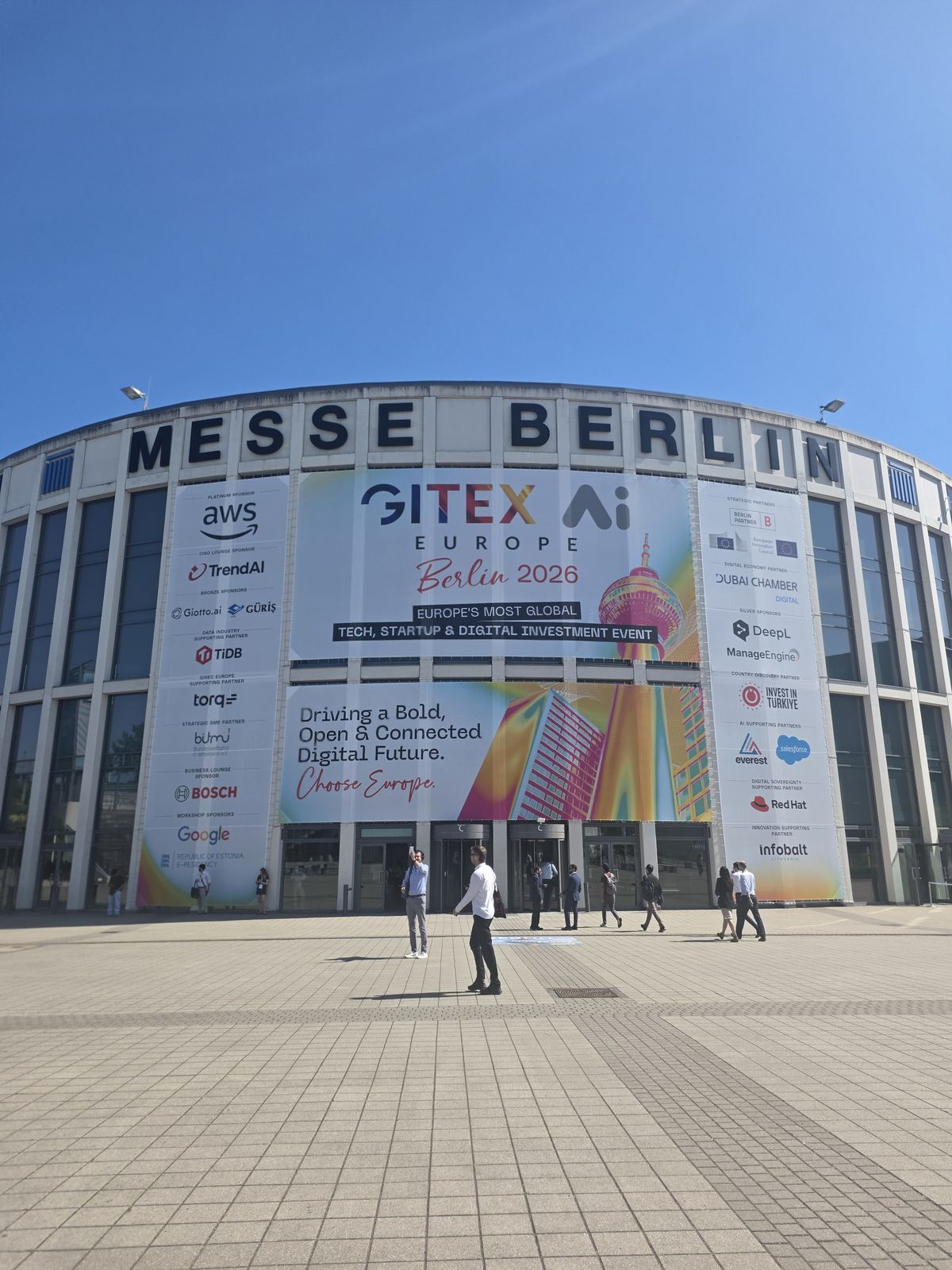
What GITEX AI EUROPE is — by the numbers
GITEX is operated by inD, the organiser behind GITEX GLOBAL in Dubai. The brand now runs regional editions including EUROPE (Berlin), AI LATAM (São Paulo) and AI INDIA (Bengaluru).
Figures from the organiser’s press release of 10 June 2026:
| Dates | 30 June – 1 July 2026 (two days) |
| Venue | Messe Berlin, South Entrance |
| Countries represented | 80+ |
| Exhibitors and startups | 950 |
| Investors | 600+, managing over US$1 trillion in assets |
| Speakers | 150+ |
| Conference | 3 stages, 70+ hours of content |
| Market context | European tech market forecast to exceed €1.5 trillion in 2026 |
A note on the numbers. The organiser’s April–May press kit cited 800 exhibitors, 500 investors and 120 speakers; the June kit cites 950, 600 and 150. The show grew through its run-up. We have used the most recent figures. When sizing up an overseas event, go to the latest primary source rather than to secondary coverage.
The floor was split across three halls:
- Hall 1.2 — major vendors, cloud and infrastructure (AWS, Cloudflare, HPE, TP-Link)
- Hall 2.2 — GISEC Europe (cybersecurity) and national pavilions
- Hall 4.2 — GITEX North Star Europe (500+ startups, investor matchmaking)
Four co-located events ran in parallel: AI Everything Germany, GISEC Europe, GITEX Quantum Expo and GITEX North Star Europe.
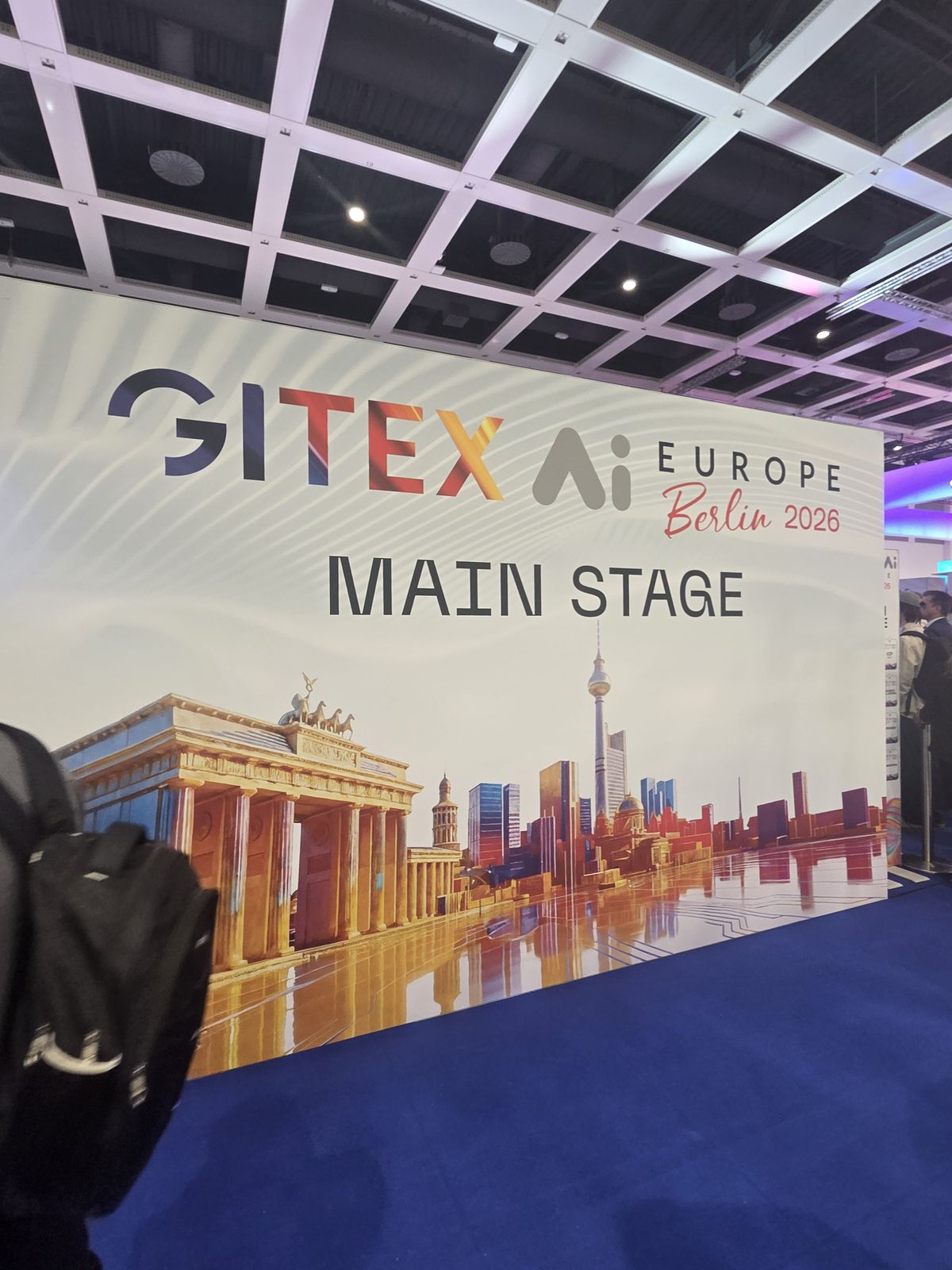
The sponsor tiers tell you who is really invested
The official website lists sponsors as logos only, with no text index. What follows was transcribed from the large banner at the venue entrance. At any trade show, the sponsor hierarchy is the most honest available signal of who committed the most to being there.
| Tier | Company / organisation |
|---|---|
| Platinum | AWS |
| Strategic partners | Berlin Partner / European Innovation Council |
| Silver | DeepL / ManageEngine |
| Digital economy partner | Dubai Chamber Digital |
| Digital sovereignty supporting partner | Red Hat |
| AI supporting | Everest / Salesforce |
| Data industry | TiDB (PingCAP) |
| CISO Lounge / GISEC | TrendAI (Trend Micro) / Torq |
| Bronze / Country discovery | Giotto.ai / GÜRİŞ / Invest in Türkiye |
| Business lounge / Workshops | BOSCH / Google / Republic of Estonia e-Residency |
| SME / Innovation | bitmi (German SME IT association) / Infobalt (Lithuania) |
Three things stand out.
The top sponsor is AWS. A US hyperscaler took the largest slot at an event themed on European sovereignty. Read correctly, this is not a Europe-versus-US standoff. It is a global provider moving to meet European requirements head-on — a good indication of how seriously the market is being taken.
“Digital Sovereignty Supporting Partner” exists as a tier. Red Hat holds it. Sovereignty has become a line item on a sponsorship menu.
Government and quasi-public bodies sit inside the sponsor hierarchy. Berlin Partner, the European Commission’s EIC, Invest in Türkiye, Estonia’s e-Residency programme. This is as much an investment-attraction and policy venue as a commercial exhibition.
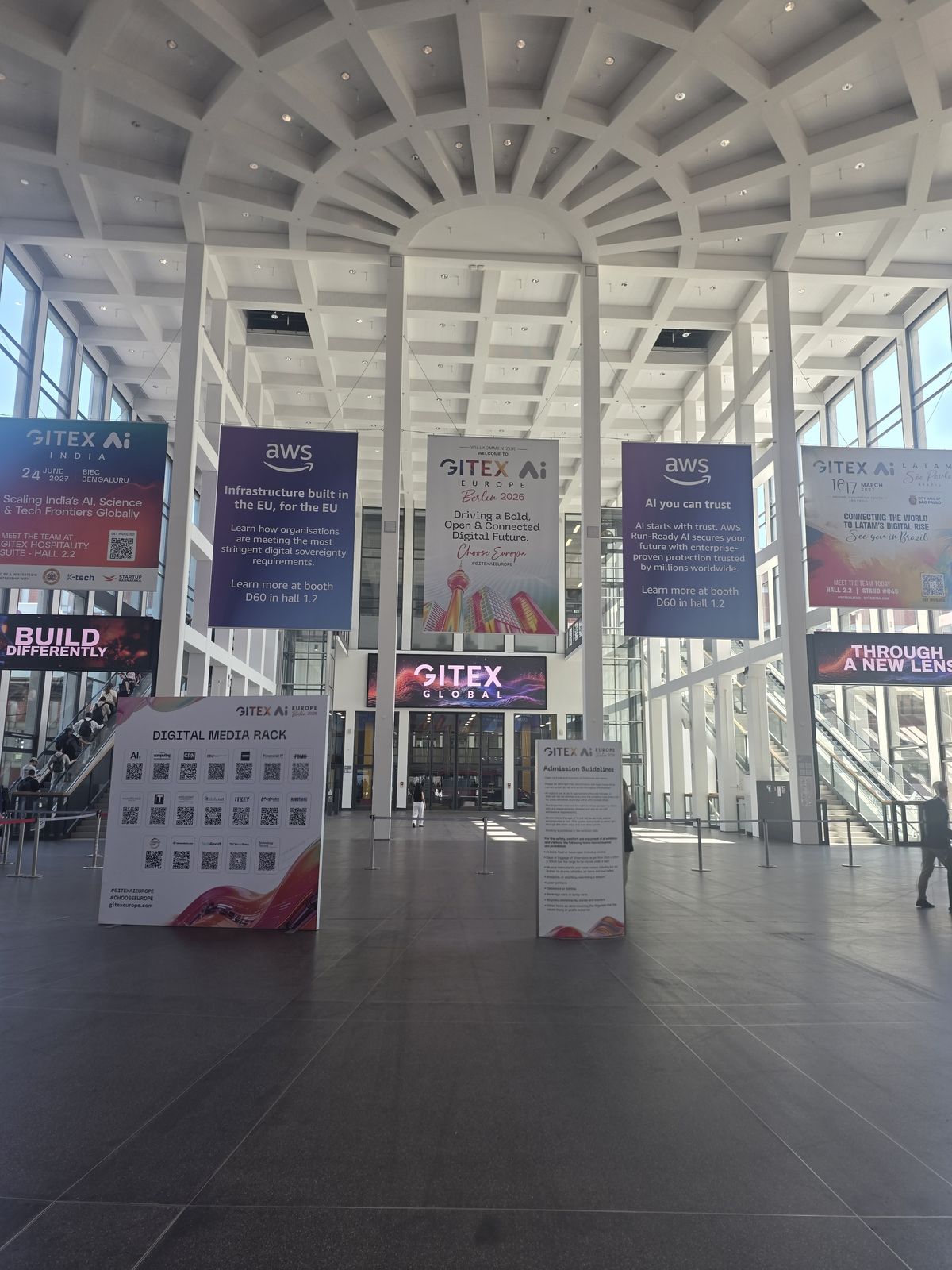
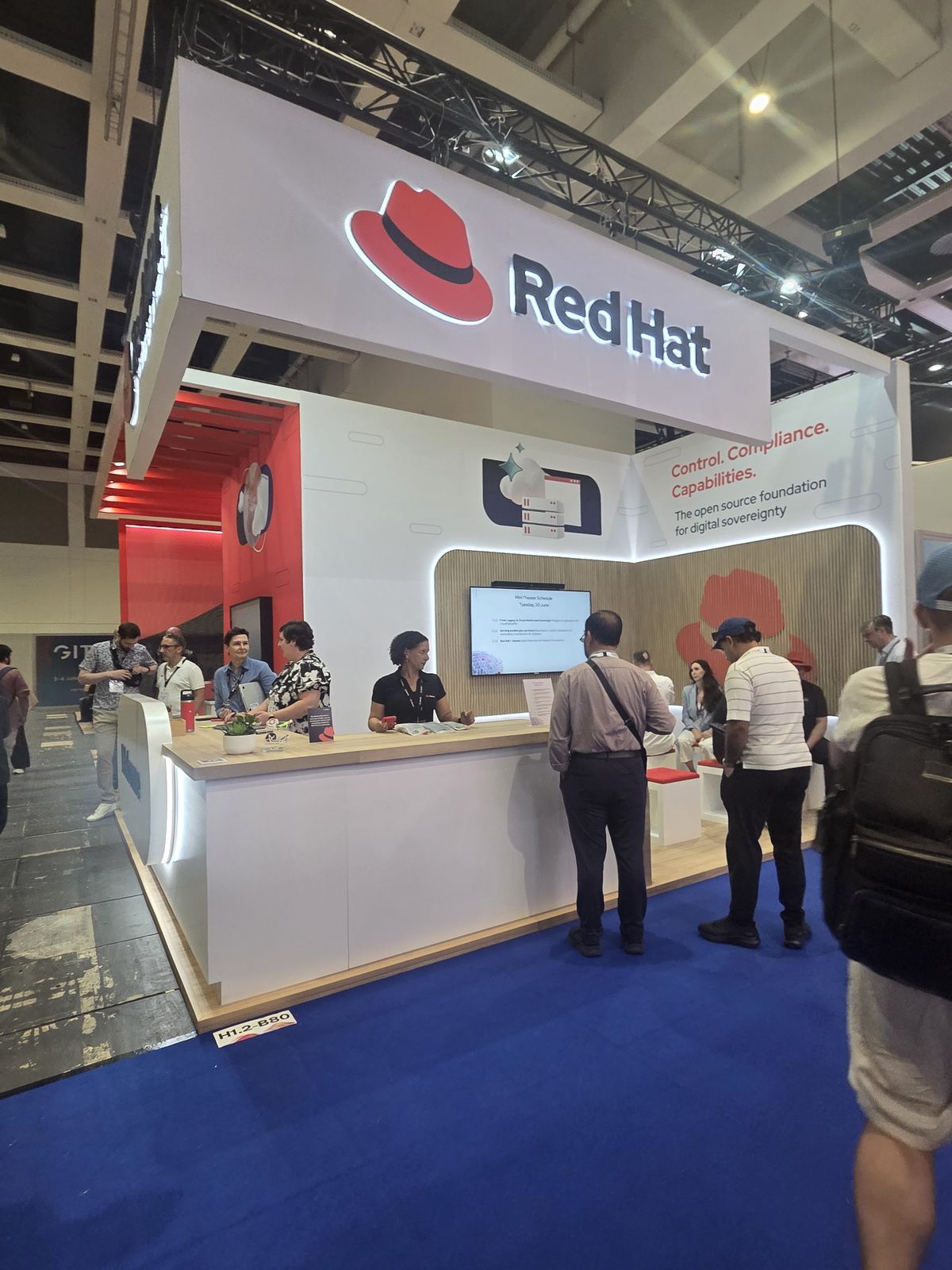
Sovereign cloud — the thickest layer on the floor
This was the single largest theme by floor space. The stand copy alone tells the story.
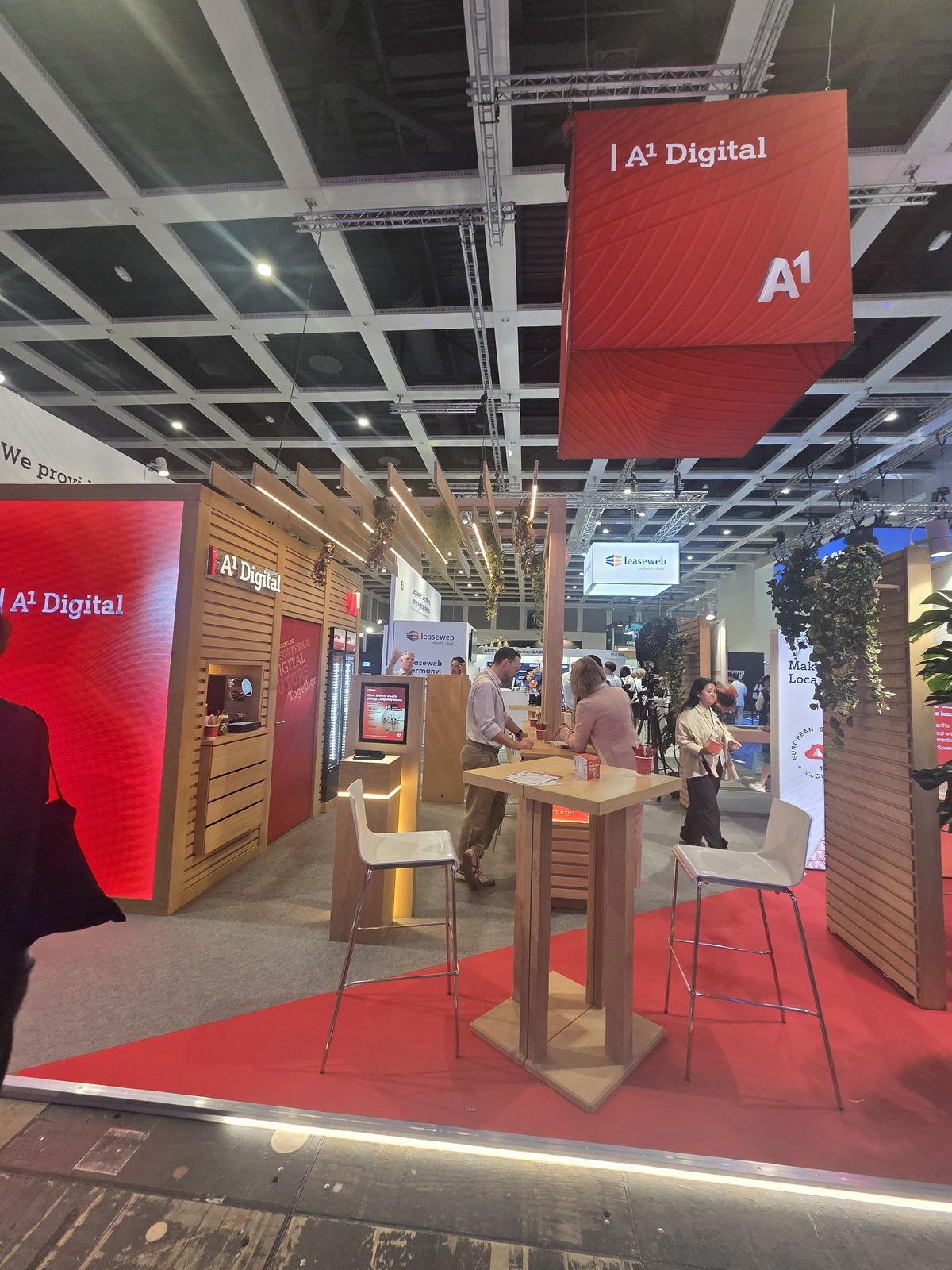
A1 Digital and Exoscale led with “Make Cloud Local Again!“, with European Sovereign Cloud front and centre. That such a line now works commercially is, in itself, a summary of the mood in Berlin.
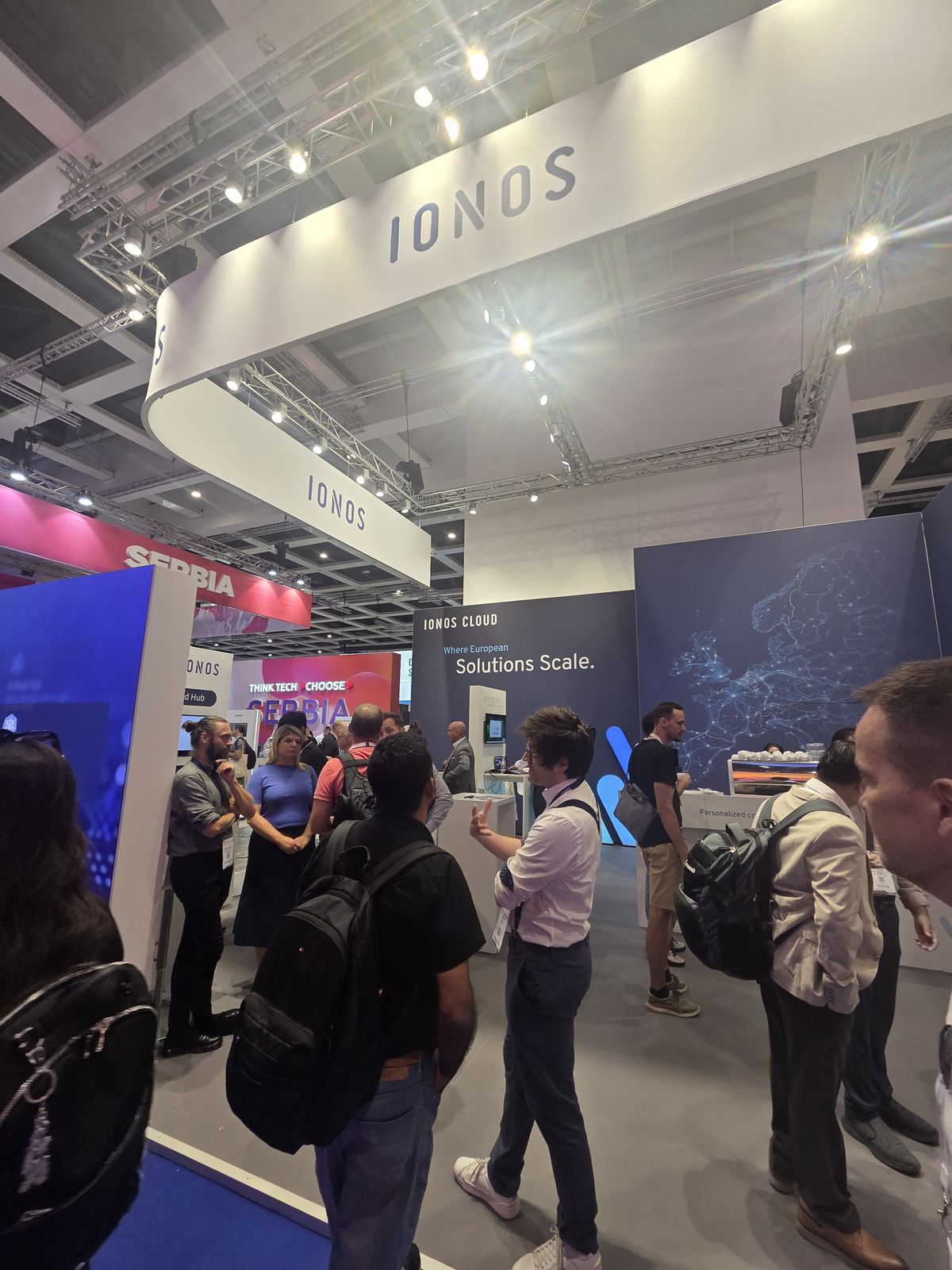
In the organiser’s background materials, Dr. Andreas Nauerz, Chief Product Officer at IONOS, sets out the working definition of sovereignty:
Sovereignty is determined not just by the physical location of a data centre, but by who owns the provider, and where the company is headquartered. Sovereignty goes beyond GDPR conformity: it requires technological control over the cloud stack, open standards, and genuine interoperability.
For any non-European vendor selling into the region, that is the sentence to absorb. “Our data sits in an EU region” is no longer a complete answer.
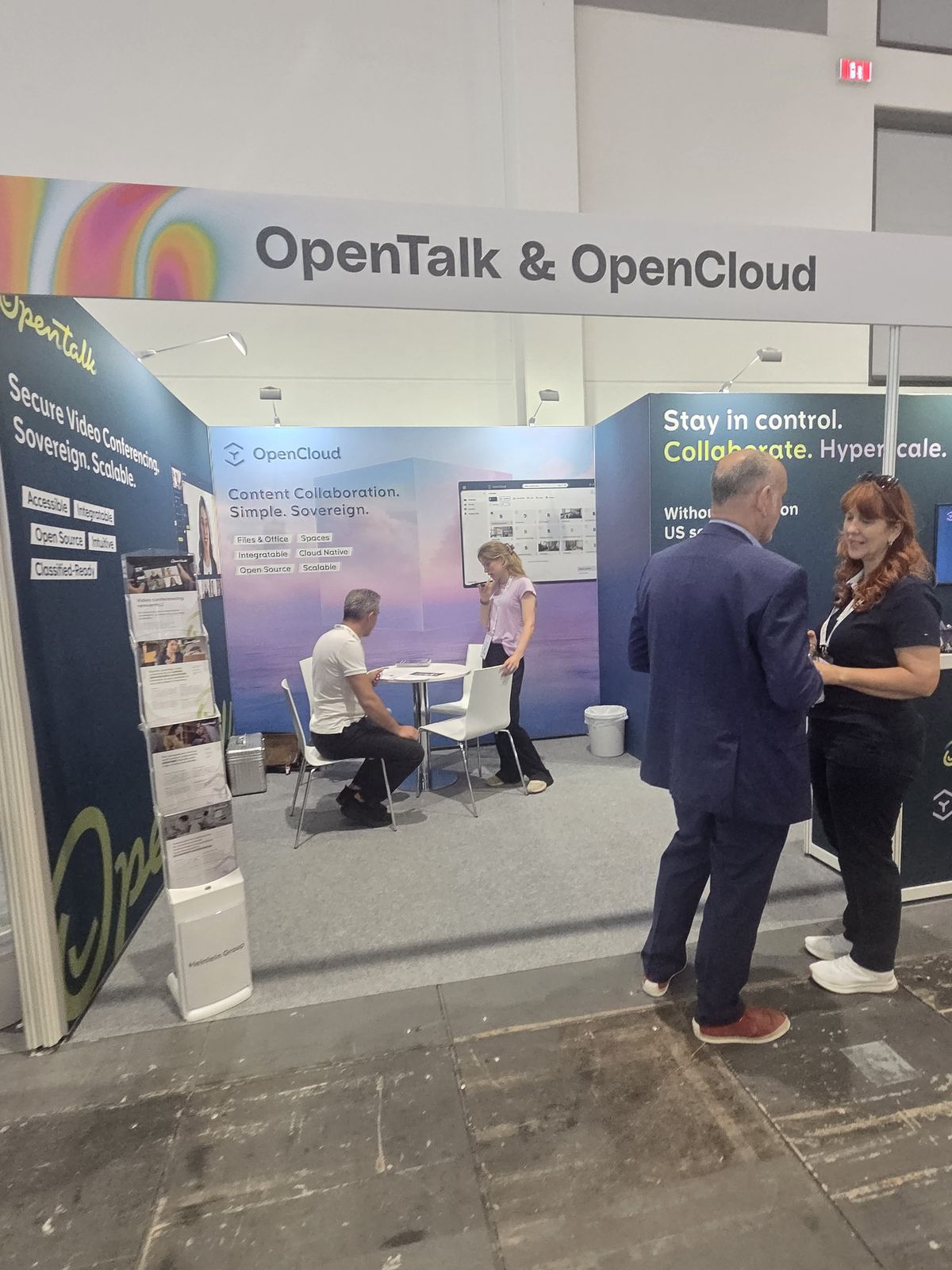
The most telling stand of the show, though, belonged to neither a cloud provider nor a European firm.
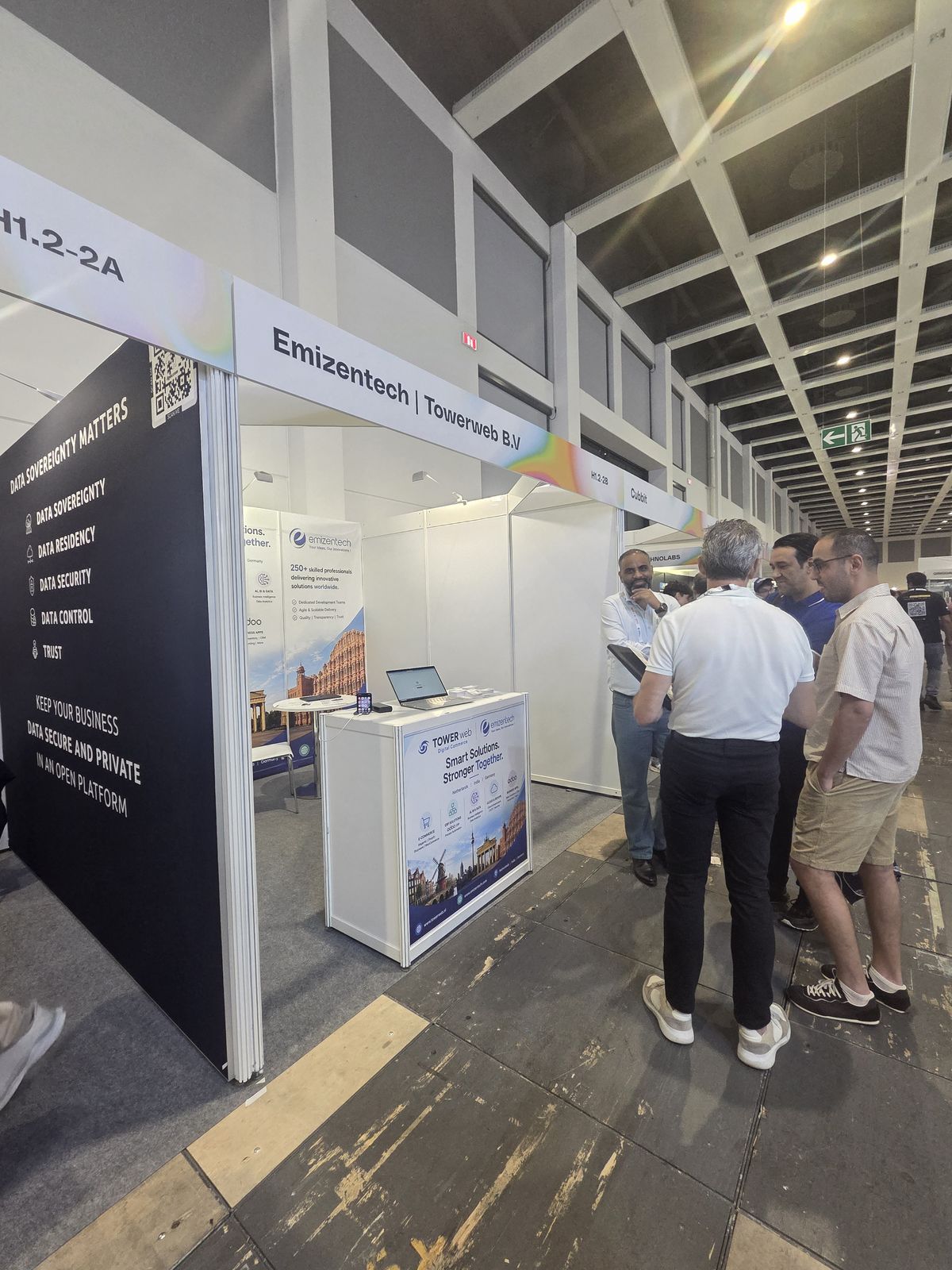
An Indian software development firm devoted a full wall to “DATA SOVEREIGNTY MATTERS” — data sovereignty, residency, security, control, trust. When a services company leads with sovereignty rather than capability or price, the term has stopped being a talking point and become a condition of winning work.
Also present: Nextcloud (Germany, exhibiting alongside Deutsche Telekom), Zadara (“Sovereign cloud. Multi-tenant. Any AI.”), Cubbit (Italy), EmpowerGPT (“model-agnostic, EU hosted”) and FutuGen (Czech Republic, “AI that runs at your place, under your control”).
Regulation names have become product headlines
Across GISEC Europe in Hall 2.2, the pattern was consistent: EU AI Act, NIS2, DORA and GDPR appear in the headline, not the footnotes.
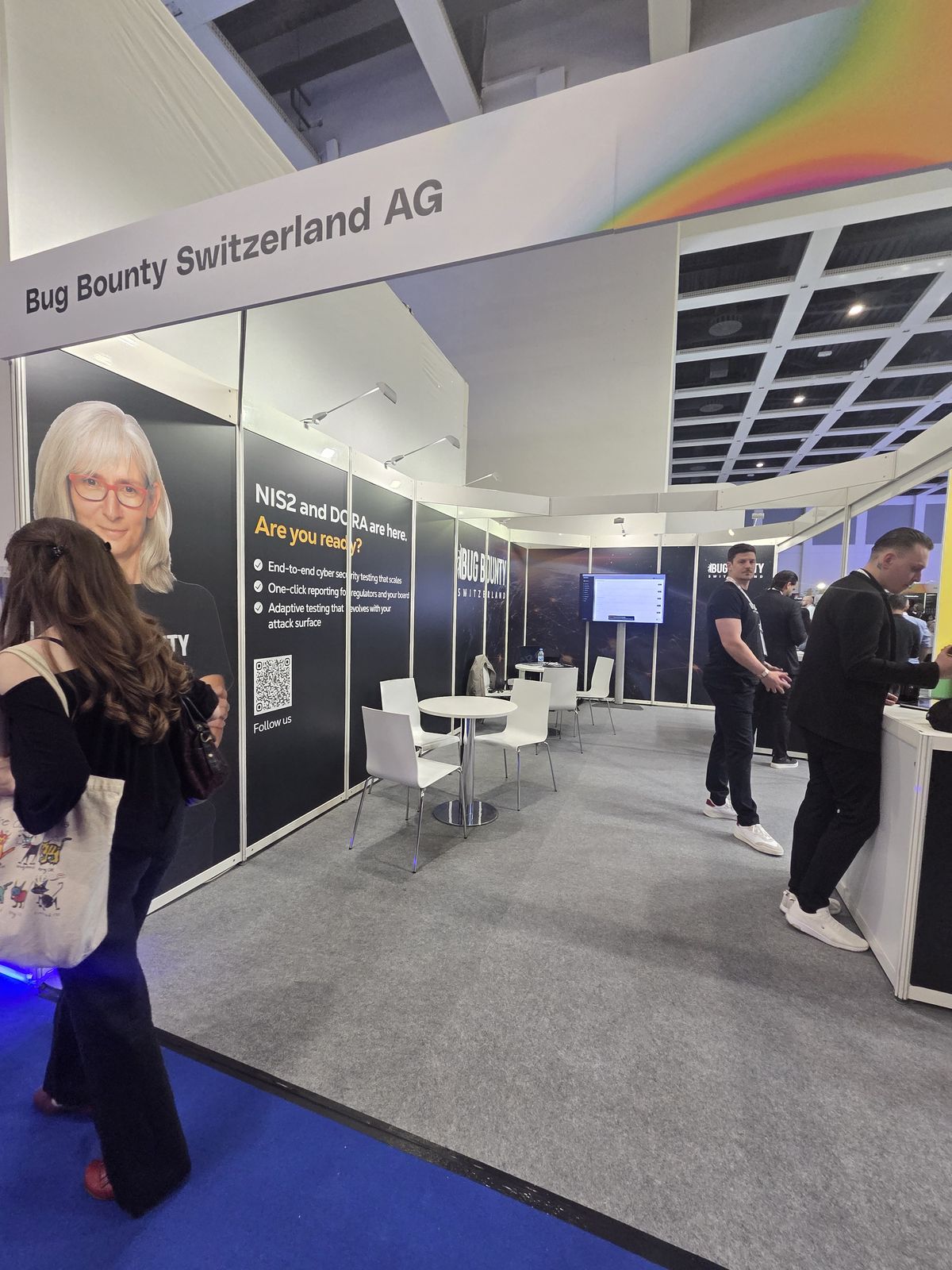
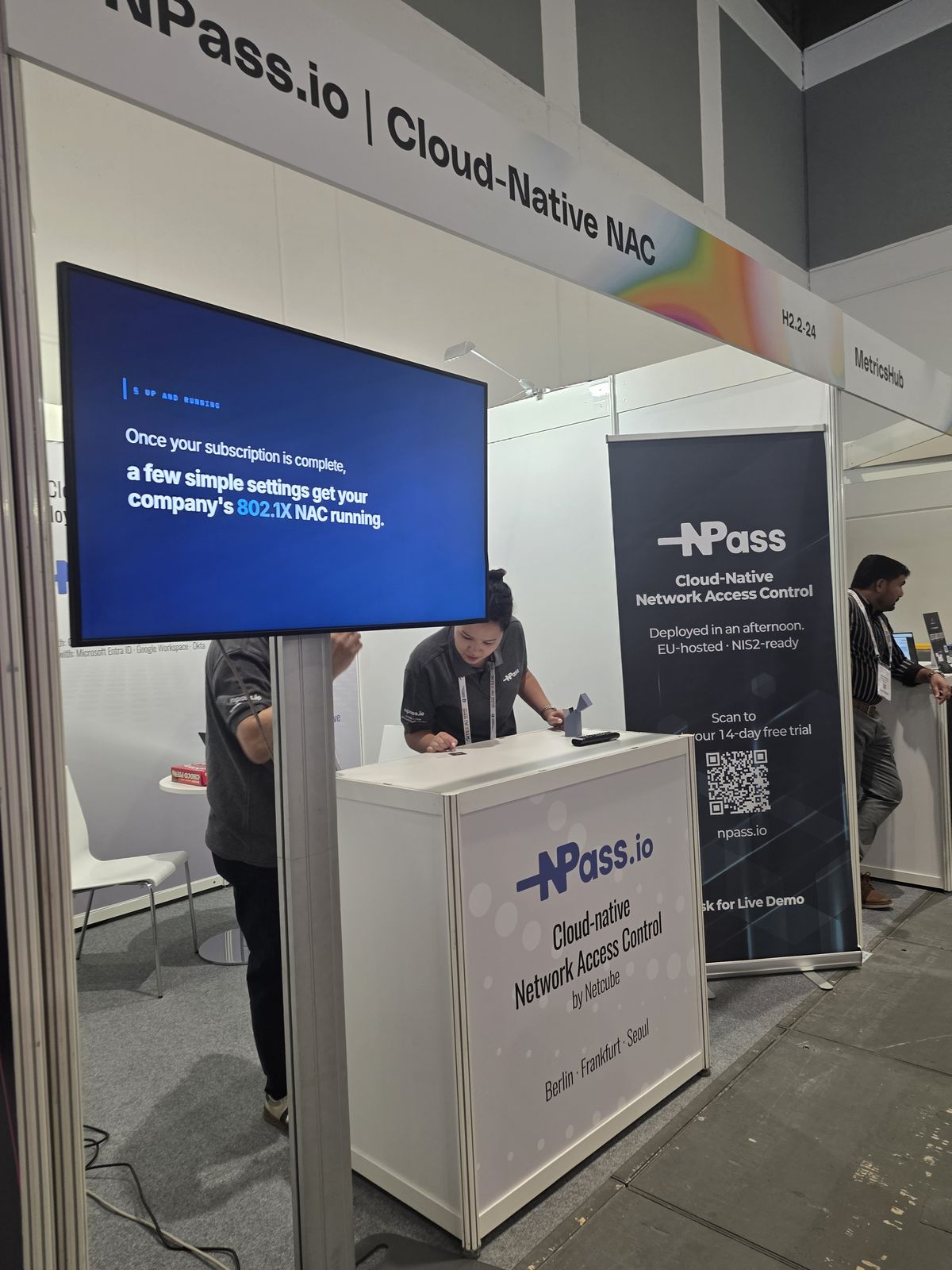
Compliance status comes before the feature list. For anyone used to markets where capability leads and certification follows, the reversal is worth noting.
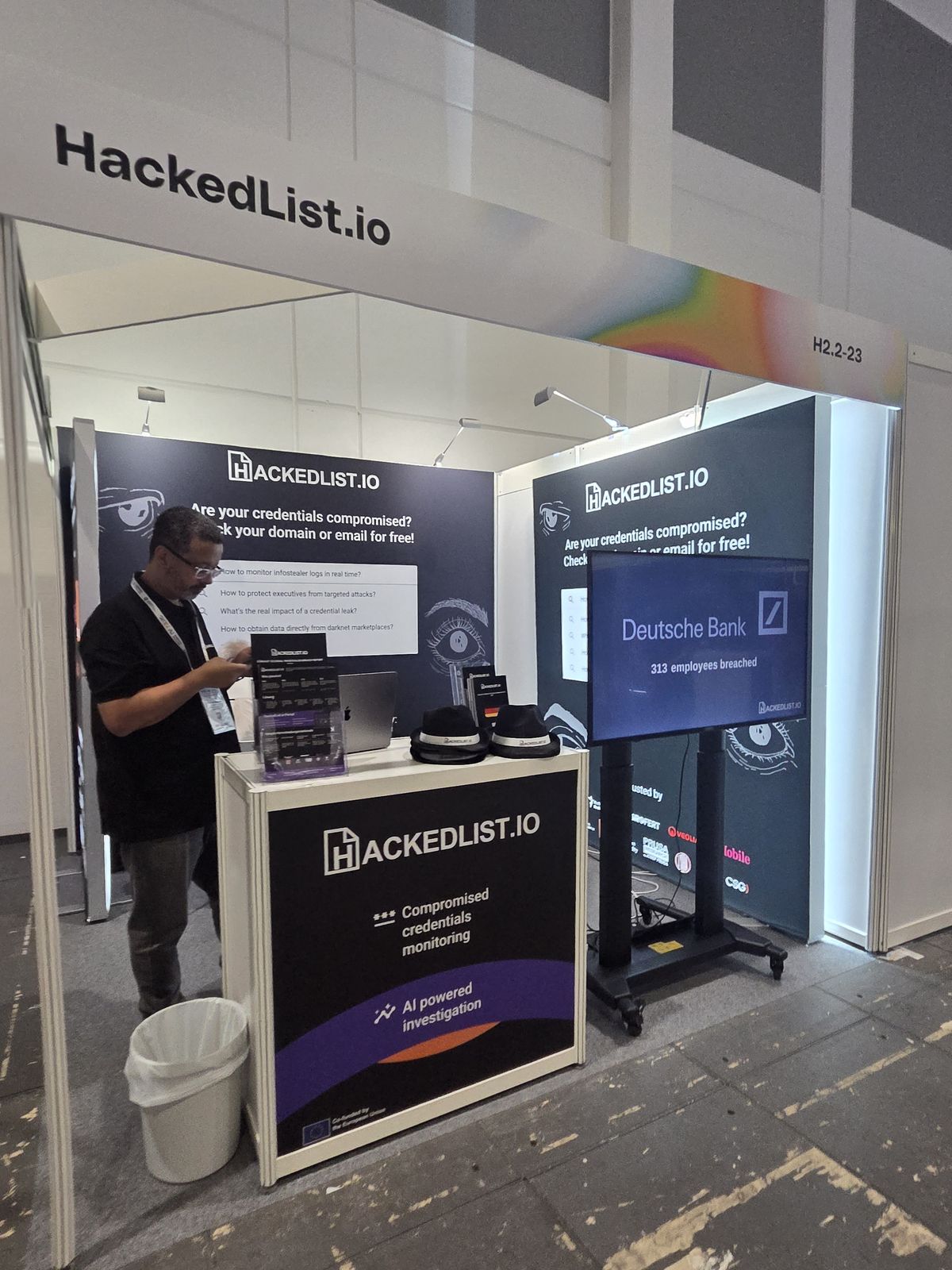
HackedList.io ran its demo on named companies and real breach counts. It lands far harder than an abstract description of the threat, and it is a lesson in demo design as much as in security.
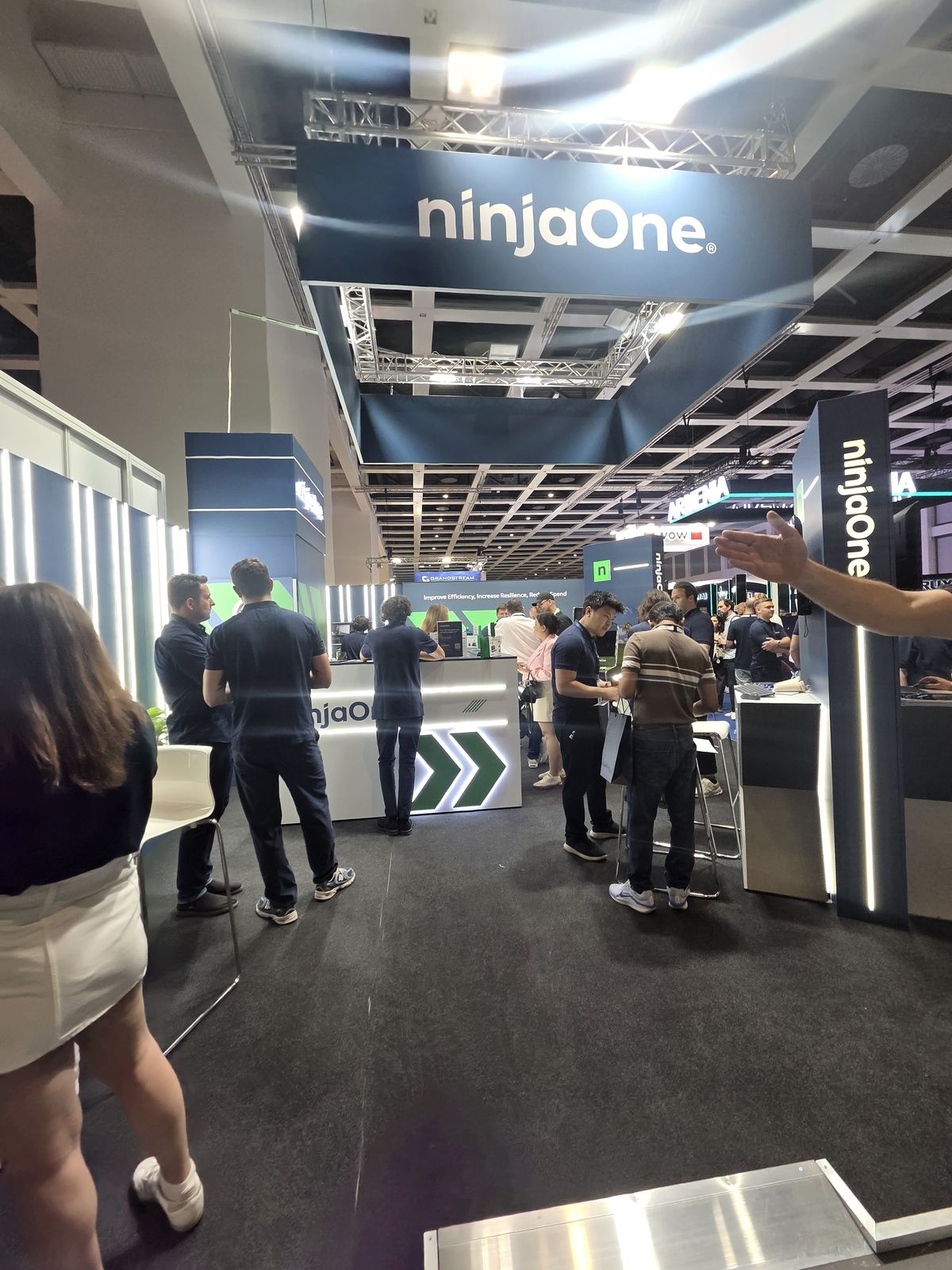
The most effective piece of floor marketing at the show was NinjaOne’s. Rather than buying more stand space, it placed a Formula 1 show car in the entrance lobby — winning on position in the visitor flow rather than on square metres.
Deep tech and quantum — the EU exhibits itself
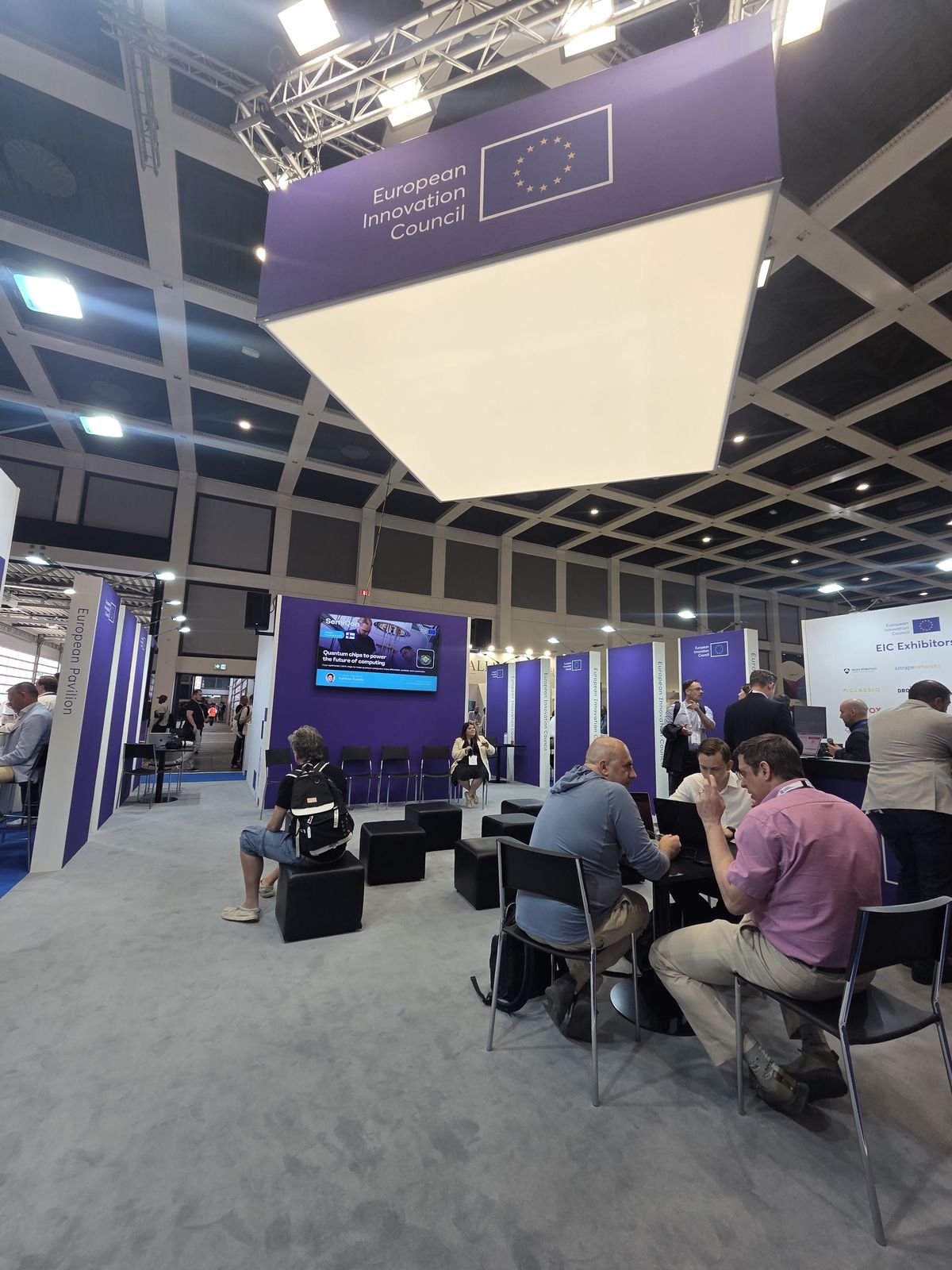
A European Commission agency exhibiting in its own right — not as sponsor or patron, but as a stand-holder actively selling the companies it backs. For visitors from markets where public bodies stay in the background, this is one of the more instructive things to see in person.
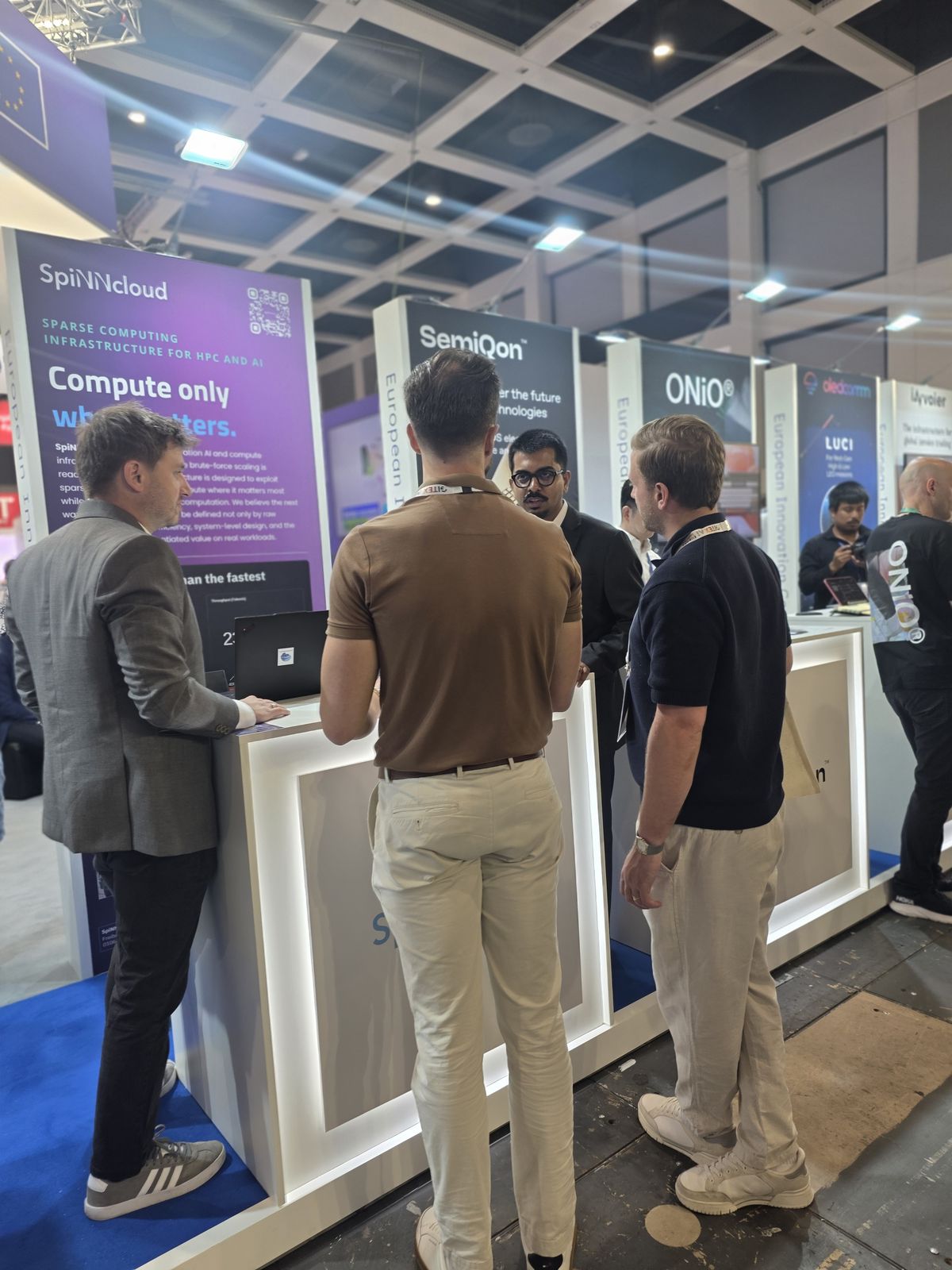
The same zone held VSORA (France, AI inference silicon), VoxelSensors (Belgium, perception sensors for XR and robotics), Innatera (Netherlands, neuromorphic microcontrollers), CLASSIQ (Israel, quantum software) and Alias Robotics (Spain, “Sovereign AI for Cyber Operations”). Germany fielded Quantum BW and Berlin Quantum as regional clusters with their own stands.
“Agent” has moved into the infrastructure vocabulary
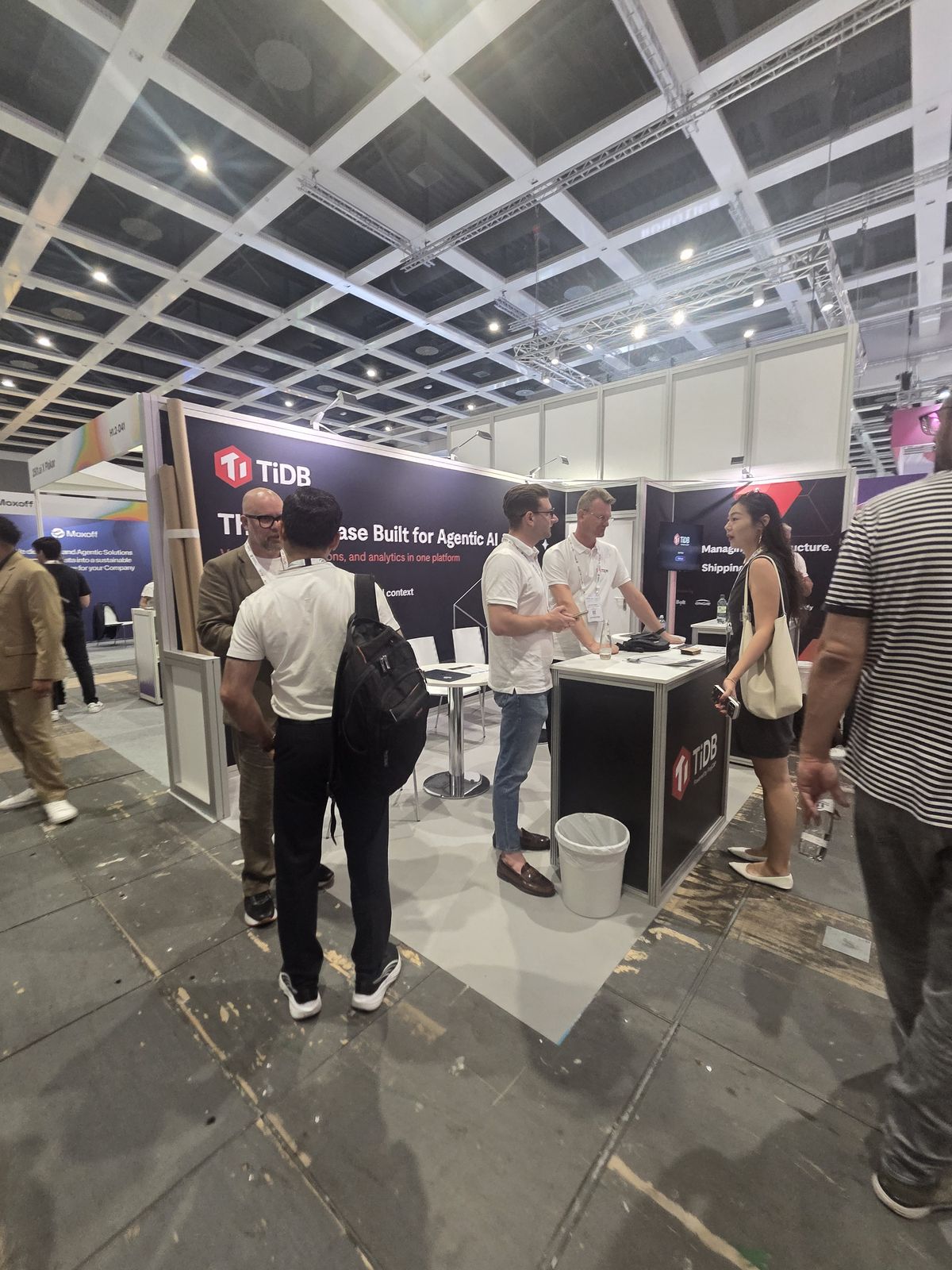
Agentic language has moved below the application layer. TiDB positions itself as “the database built for agentic AI”; Salesforce sells the “agentic enterprise”; Alteryx pitches “get your data ready for anything”.
Ryan Foutty, VP of Business at Perplexity, framed the shift in the organiser’s materials:
Search has been largely unchanged for the last 30 years. When we set out to turn the search engine into the answer engine, it was widely unpopular. Now people see the vision we had. The next step and natural evolution of the answer engine is the action engine — an interface where agents can do real work on your behalf.
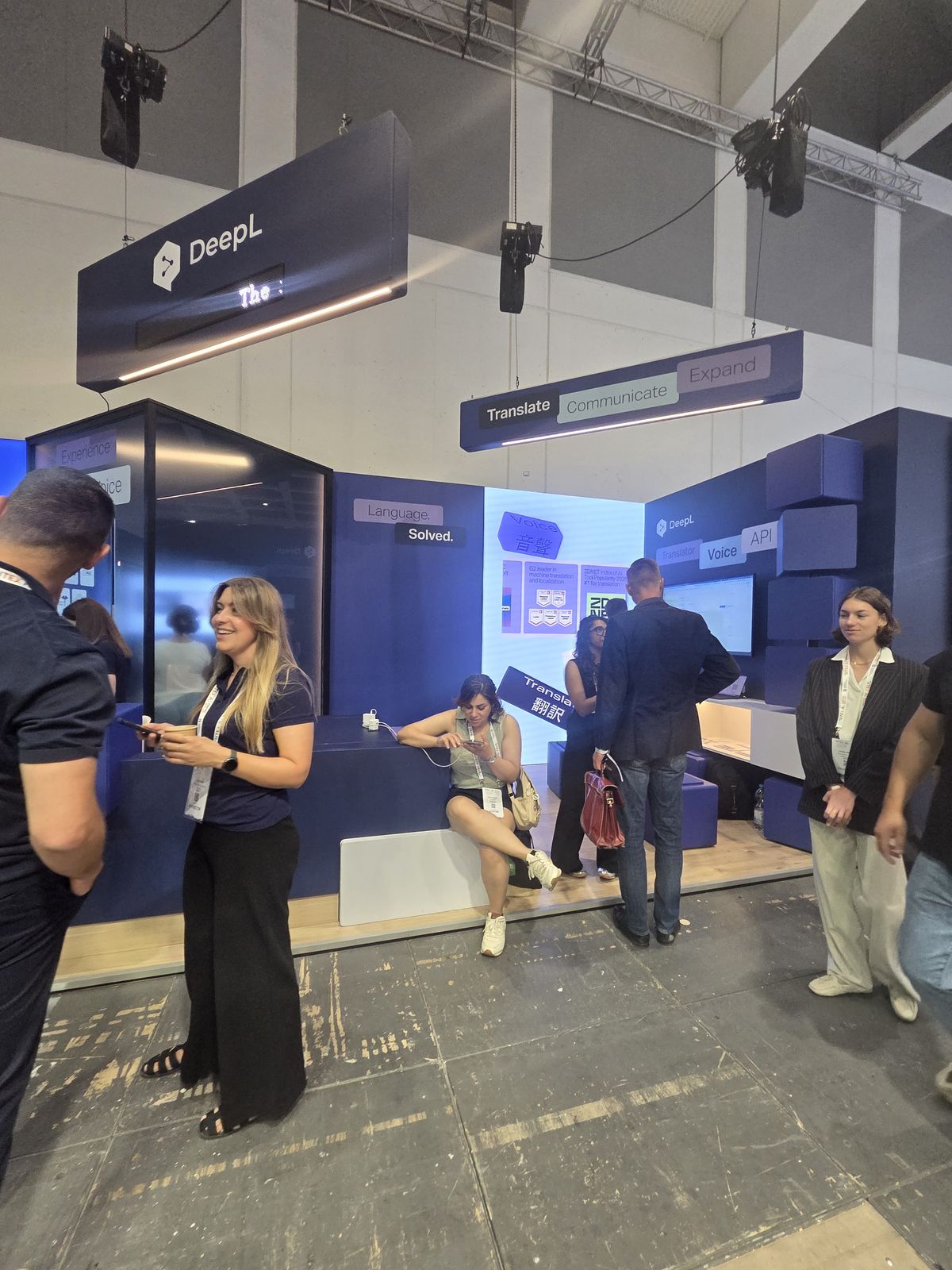
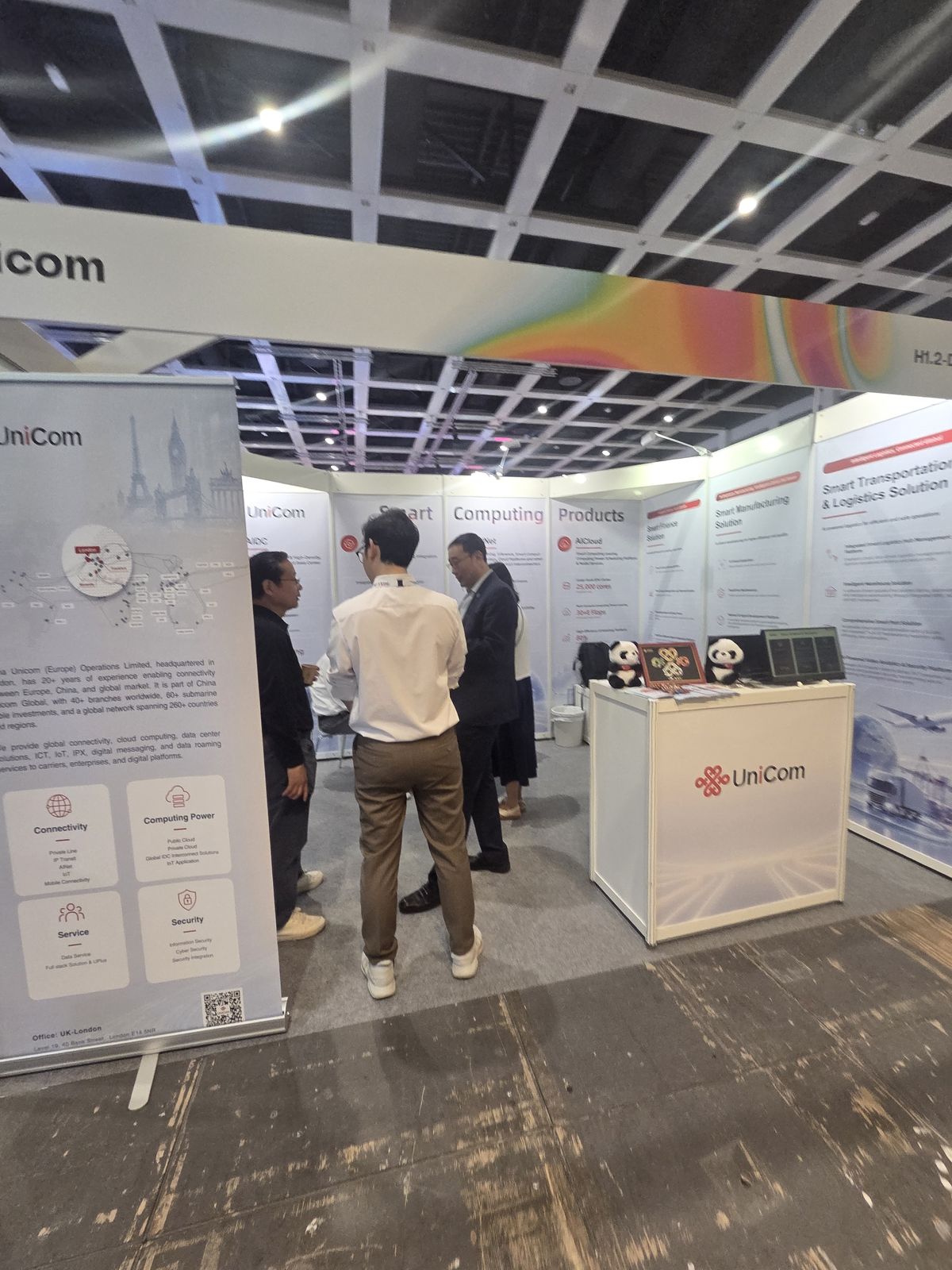
Worth recording: Europe’s sovereignty agenda is not being run as exclusion. American, European and Chinese operators shared the same halls. In practice the goal reads as more options and more leverage, not fewer suppliers.
29 national pavilions — and Japan’s first
The defining structural feature of this show is the density of country and regional investment-attraction pavilions. We counted 29 nations, regions and institutions on the floor.
The EU (European Commission / EIC); Germany at federal, state and city level (Federal Ministry for Economic Affairs, KfW, North Rhine-Westphalia, Quantum BW / Start-up BW, Region Stuttgart, startuphub.SH, Berlin and Brandenburg); Austria; Italy; Poland; Romania; Czech Republic; Lithuania; Slovenia; Serbia; Bosnia and Herzegovina; Ukraine; Moldova; the Netherlands; the United Kingdom; Japan; Türkiye; Armenia; Morocco; the UAE; Pakistan; India; Canada; the United States; and El Salvador.
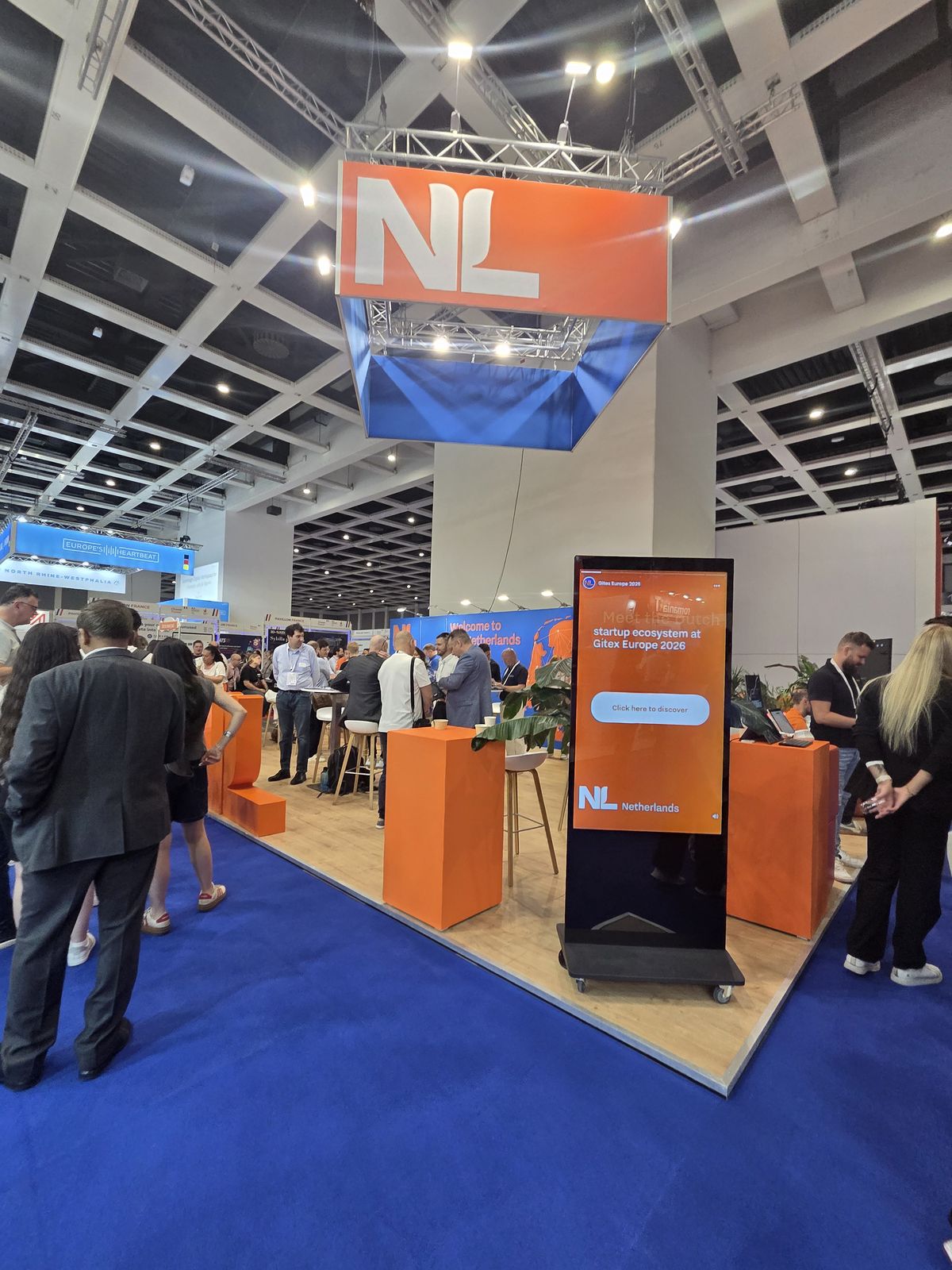
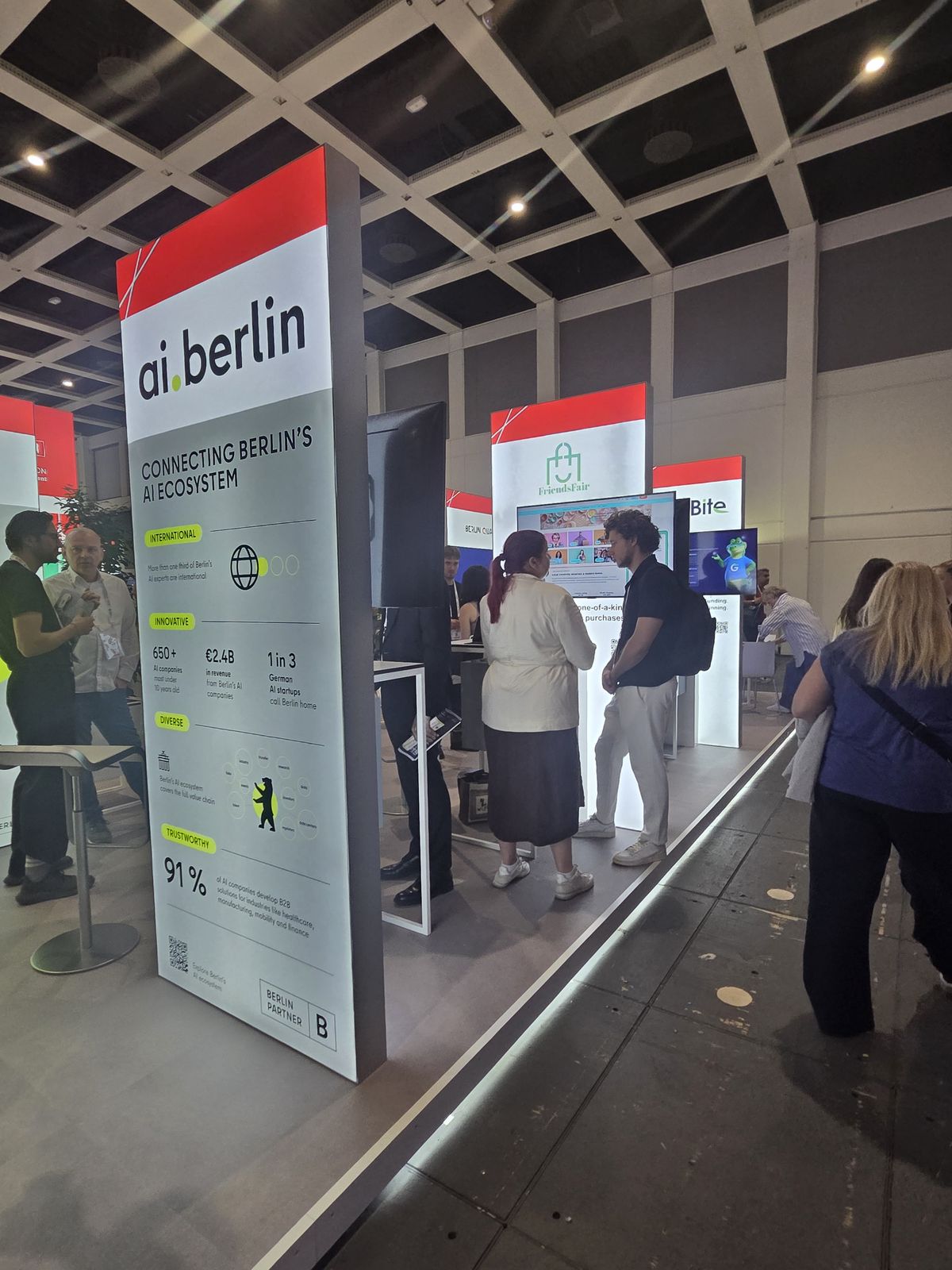
Set side by side, what separated the pavilions that landed from the ones that did not was not floor space but whether the claim was narrowed to one idea.
- Lithuania: “Real-Time Economy Icebreakers”
- Poland: “Poland. Business Forward.”
- Romania: “Creative Talent. Technical Excellence.”
Each states a position in a single line. ai.berlin explained an entire ecosystem with four verifiable figures and no adjectives. Pavilions that listed every technology sector they cover carried more information but stopped fewer people — a clean demonstration that narrower travels further.
That structure transfers directly to a company’s own positioning: one line of positioning, four verifiable figures, detail further in.
Japan exhibited a national pavilion for the first time
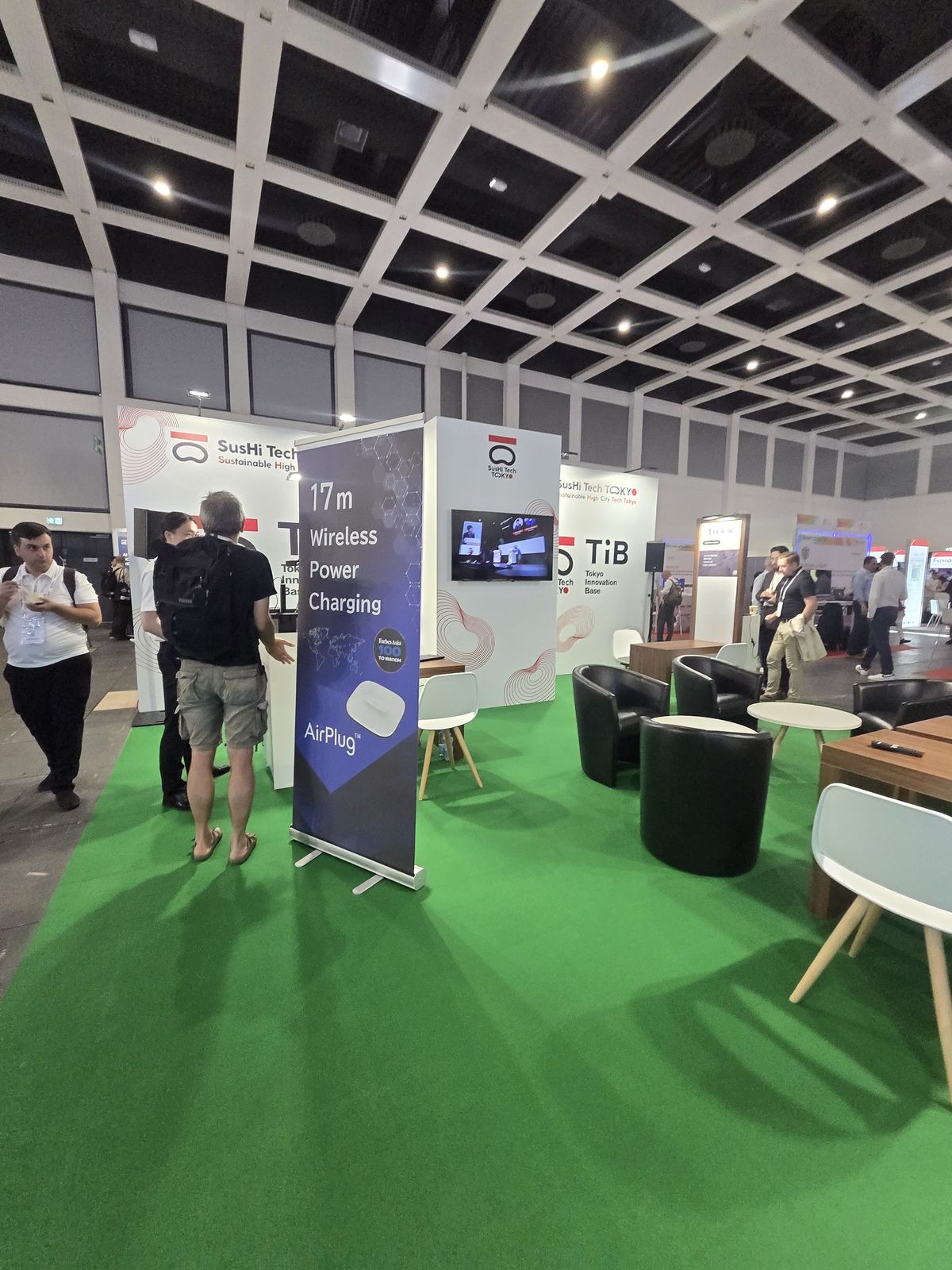
The organiser’s release notes “first-time national tech pavilions from Austria, Canada, Greece and Japan”. On the floor, Japan’s presence came from the Tokyo Metropolitan Government, via SusHi Tech Tokyo and Tokyo Innovation Base, with exhibits including wireless power transmission over 17 metres.
The practical detail matters for anyone planning to join: the slot is held by the city, not by the national trade body. That changes who you approach.
How the startup zone is designed
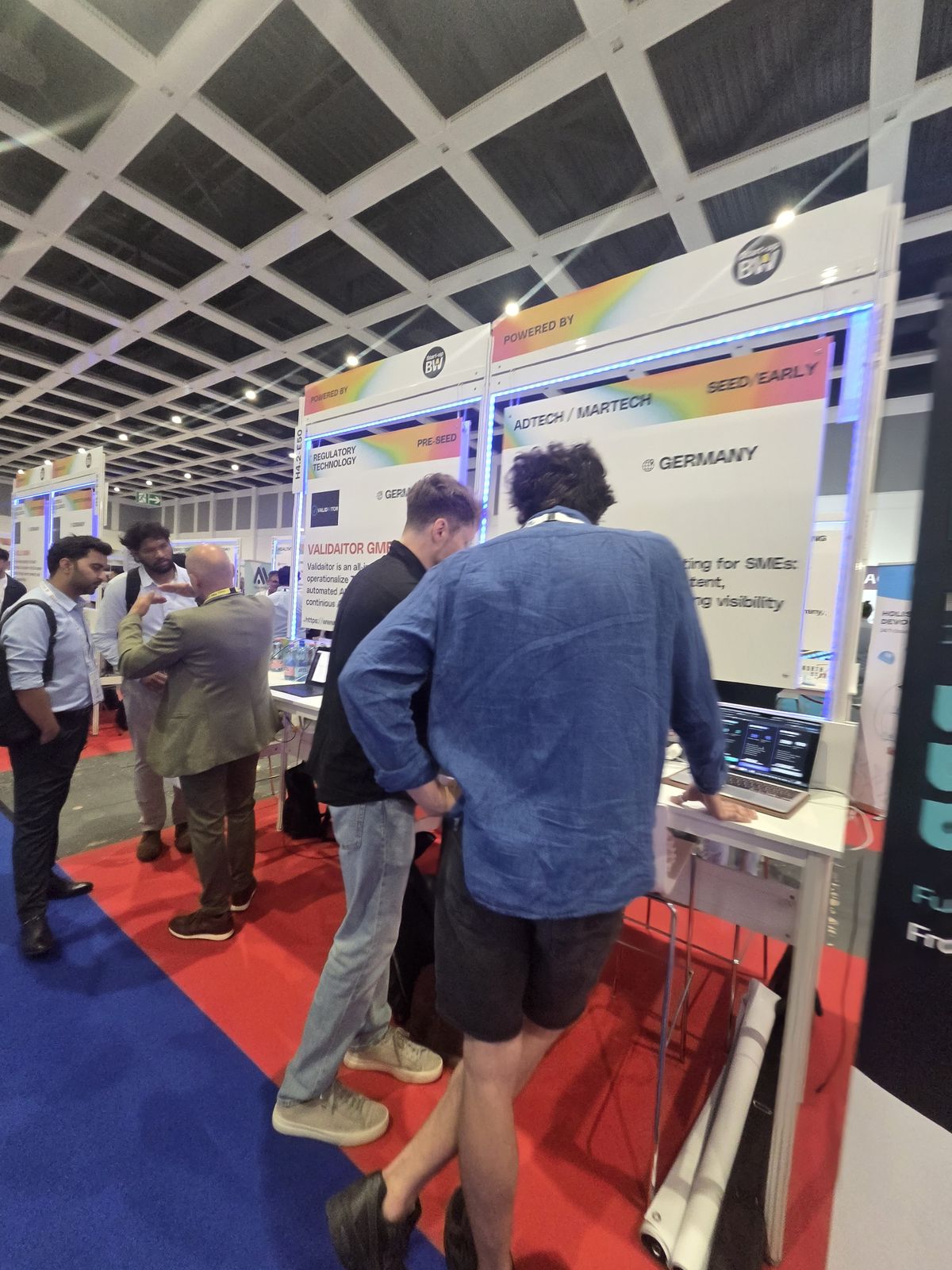
Every stand in Hall 4.2 carried the same three fields: sector, funding stage, country.
SECTOR   ARTIFICIAL INTELLIGENCE / CYBERSECURITY / SMART CITIES & IOT /
         SAAS / HR TECH / PROPTECH / HEALTHTECH / ADTECH & MARTECH /
         REGULATORY TECHNOLOGY / SOCIAL IMPACT / CLOUD SERVICES
STAGE    BOOTSTRAPPING / PRE-SEED / SEED-EARLY / SERIES A / SERIES C AND BEYOND
COUNTRY  GERMANY / FRANCE / UNITED KINGDOM / INDIA / CANADA / UKRAINE ...
An investor can screen by sector × stage × country while walking. For an event built around 600+ investors, it is a rational design, and one that many national trade shows still do not use.
Equally striking: meeting tables were allocated roughly as much floor area as exhibition stands. The venue is built for sitting down, not for standing conversations.
Europe’s AI reality in numbers
From *Unlocking Europe’s AI Potential 2026* by Strand Partners, commissioned by AWS and included in the organiser’s materials:
| European businesses with a formal AI strategy | 31% |
| Using AI for advanced use cases | 22% |
| Share of technology budget spent on compliance | 42% (up from 40%) |
| Citing EU fragmentation as a barrier to scaling | 41% |
| Citing AI and digital talent shortages as a blocker | 50%+ |
| Innovative startups that would consider relocating to scale | 38% |
| IMF estimate of the cost of internal market fragmentation | equivalent to a 110% tariff on innovation |
Sasha Rubel, Head of AI and Generative AI Policy for EMEA at AWS, describes regulatory complexity as Europe’s most consequential bottleneck — one that “taxes every other ambition”.
What is notable is the posture: these numbers were put on the table by the organisers and sponsors themselves, alongside the pitch for investment and talent. “Choose Europe” reads less as a boast than as a statement of intent.
What we learned about making the most of it
How you use the two days changes what you get out of them. Four observations from the floor.
Density is the value, not scale. Eighty-plus countries and 950 companies across three halls in two days. For reaching the European market it is as efficient a format as exists, and the cost-benefit is strong once travel and accommodation are factored in. With a clear objective, the ground can be covered in a day.
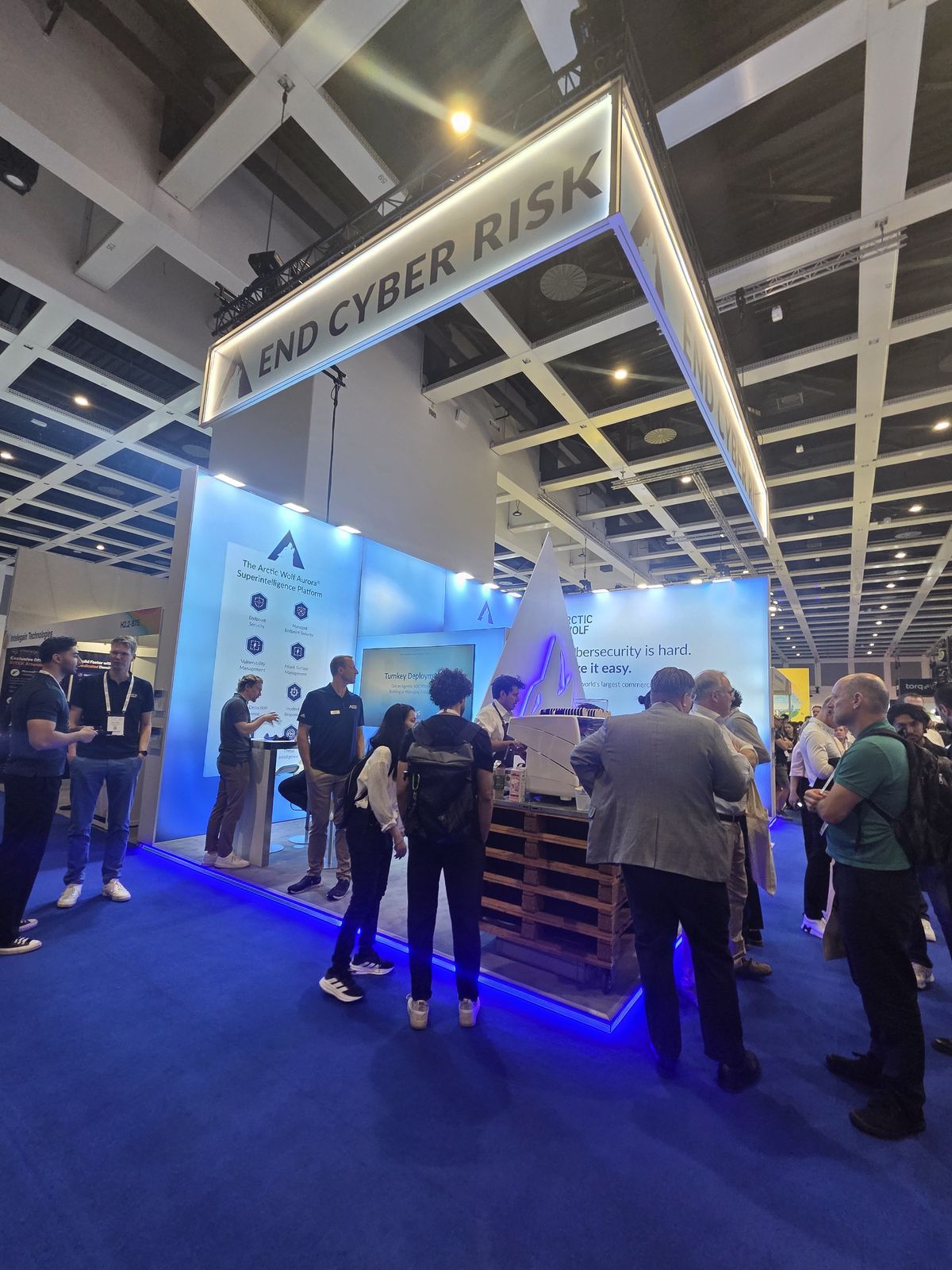
Large and small sit on the same aisle. A desk-and-panel stand sits next to AWS, Arctic Wolf and NinjaOne. Everything reads at the same level regardless of company size, which makes the floor unusually good for finding companies you have not heard of. If your interest is narrow, identify stands from the exhibitor list beforehand.
Pre-booked meetings drive the outcome. Investor passes and matchmaking programmes are well established, and a full diary supports close to twenty meetings in a day. The event is designed around deciding who to meet in advance.
Check scale figures against the latest source. The organiser’s press kit was revised upward through the run-up. For exhibiting decisions, work from the most recent primary document.
What this means for companies entering Europe
Answer four acronyms before you compare features
EU AI Act, NIS2, DORA, GDPR. And, following the IONOS position above, sovereignty is now assessed on who owns the provider and where it is headquartered — not merely on where the servers sit. Any vendor approaching a European buyer should be able to put three things on a single page:
- Hosting region and the legal jurisdiction of the operating entity
- Compliance status against EU AI Act, NIS2, GDPR — and DORA for financial services
- Lock-in exposure: open standards and interoperability
Exhibiting comes in three tiers, with nothing in between
| Tier | Examples | Characteristics |
|---|---|---|
| Standalone large stand | AWS, Arctic Wolf, NinjaOne | Wins on space and experiential draw. Budget in the tens of thousands of euros and up. Awareness play |
| Inside a national or regional pavilion | ITALIA (ITA), Türkiye (Ministry of Trade), romania IT, Start-up BW, SusHi Tech Tokyo | Shared cost, plus pre-arranged matchmaking, media exposure and government networks. The realistic route for SMEs |
| Standard pod, standalone | Desk and panel in North Star | Lowest cost. Works well with a pre-booked diary |
There is no middle tier. If a pavilion slot is not available, the standard pod is effectively the option — which makes checking pavilion application windows the first step, not the last.
Europe’s AI adoption is still early, and that is the opening
With 31% holding a formal AI strategy and 22% running advanced use cases, the gap in Europe is practical implementation support, not frontier models. For companies from Japan and the wider Asia-Pacific region, the entry point is delivery, operations and adoption inside the organisation.
Frequently asked questions
How does GITEX AI EUROPE differ from GITEX GLOBAL in Dubai?
They serve different purposes. GITEX GLOBAL runs five days in Dubai and is built on breadth. GITEX AI EUROPE, launched in 2025, is a two-day event narrowed to European market business and startup–investor matchmaking, with 950 exhibitors in 2026. If Europe is the target, this is the denser of the two.
When is the 2027 edition?
At the time of writing (August 2026) the 2027 dates for the European edition have not been formally announced. Dates displayed on site for sister events: GITEX GLOBAL, 7–11 December 2026 (Dubai); GITEX AI LATAM, 16–17 March 2027 (São Paulo); GITEX AI INDIA, 2–4 June 2027 (Bengaluru).
Which pass is appropriate?
Twelve pass types were in use on site. A visitor pass covers the exhibition floor; conference sessions require a delegate or conference pass. Investor and delegate categories are separate, and media access requires accreditation with editorial review.
Is English sufficient?
Yes. Signage and sessions are in English throughout. Some German stands carry bilingual materials, but with 80+ countries represented English is the working language.
What preparation makes the biggest difference for business development?
Registering for the matchmaking programme. Platforms including b2match and Enterprise Europe Network are used to arrange meetings in advance. Two days across three halls supports close to twenty meetings if the diary is filled beforehand.
Is it worth attending specifically for cybersecurity?
GISEC Europe consolidates the category in Hall 2.2, with Arctic Wolf, Torq, NinjaOne and TrendAI among the main vendors, plus an invitation-only CISO Lounge and a CISO meetings programme. For reading European procurement trends — particularly the state of NIS2 and DORA implementation — the concentration is high.
In closing
GITEX AI EUROPE 2026 was, at heart, an event about one question: whether Europe can own its AI and cloud foundations. Eighty-plus countries, 950 companies and 600 investors representing over US$1 trillion, across two days and three halls. For selling into Europe, sourcing from Europe or investing in European startups, the density is hard to match.
The most valuable thing to carry home was watching digital sovereignty complete its move from policy language into purchasing criteria — visible in the headline copy on the stands. Four acronyms now appear above the fold on product messaging, and the question has shifted from where data is stored to which jurisdiction governs the entity holding it.
At the same time, Europe’s own AI adoption remains at an early stage. The opening for companies from outside the region lies not in competing at the model layer but in implementation, operations and making the technology stick inside the organisation. Next year’s edition should be worth seeing in person again.
About this report
LIF Tech is the technology media arm of LIFRELL Inc. (Tokyo), covering AI tools, marketing technology and international technology conferences for a Japanese business readership. This report was produced from on-site coverage at Messe Berlin on 30 June 2026 under media accreditation, comprising 234 photographs of stands and signage, together with press materials issued by the organiser.
For enquiries about on-site coverage of international technology events, market-entry positioning for the Japanese market, or editorial partnerships:
*Information is current as of August 2026. Event details, exhibitor composition and future dates are subject to change. Company names, stand numbers and stand copy cited here were confirmed directly from photographs taken by LIF Tech at the venue on 30 June 2026. Figures on scale, speakers and research data are drawn from press materials issued by the organiser (releases dated 10 June and 16 June 2026). For the latest information see the official GITEX AI EUROPE site (https://www.gitexeurope.com/).*